
What is a Palate Expander?
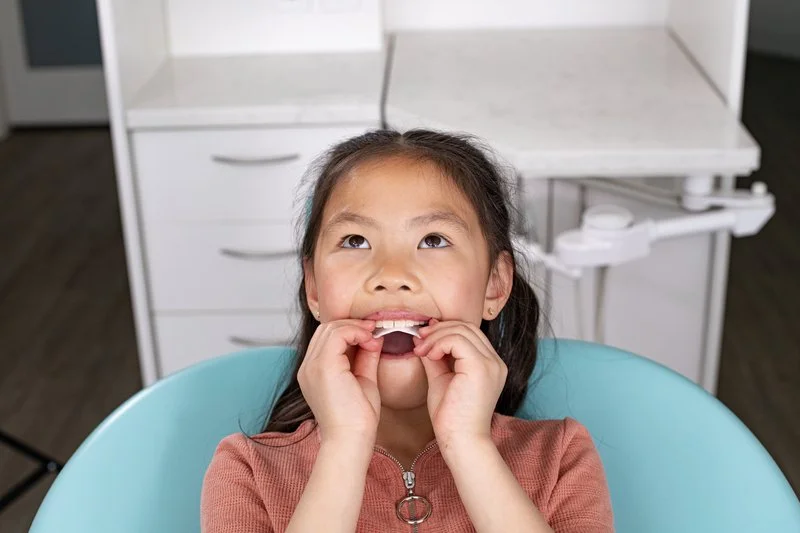
If your child has been recommended braces or Invisalign, the orthodontist may also mention a palate expander during the discussion. This often comes up when there is not enough room in the upper jaw for the adult teeth to come in properly, or when the bite does not line up the way it should.
A palate expander is an oral device used to widen the upper jaw. The goal is not to straighten the teeth directly, but to create space in the mouth so the teeth may have a better chance of aligning properly.
Because of this, expansion is sometimes recommended before or alongside braces or Invisalign as part of the overall orthodontic plan. But how exactly does a palate expander work?
Understanding Palate Expansion
When an orthodontist talks about palate expansion, they are referring to a process that gradually widens the upper jaw so there is enough room for the teeth to develop and fit properly. This is done using a palate expander, which is an orthodontic appliance designed specifically for the upper jaw, also known as the maxilla.
Instead of shifting individual teeth like braces or aligners do, the expander works by increasing the width of the upper arch itself. As the upper jaw widens over time, enough room becomes available for teeth that may otherwise erupt crowded or out of position.
By creating this space early, orthodontic treatment that follows, such as braces or Invisalign, can focus on guiding the teeth into place within a jaw that already has sufficient room.
The Science Behind How Palate Expanders Work
The upper jaw is made up of two halves that meet in the middle of the roof of the mouth. This meeting point is called the mid-palatal suture. In children, this area remains flexible because the bones of the upper jaw are still developing. That stage of growth is what allows palate expansion to take place.
A palate expander works by applying steady pressure to both sides of the upper jaw. Over time, this pressure gradually separates the two halves along the mid-palatal suture. As the gap forms, the body produces new bone within the space. This allows the widened upper jaw to stabilise after the expansion process, which is known as maxillary expansion.
Comparing Traditional Expanders and Invisalign Palatal Expanders
When a palate expander is recommended, two options are often discussed: conventional fixed expanders and the Invisalign Palatal Expander.
Both aim to widen the upper jaw, but the way they are worn and adjusted during treatment can differ significantly.
Conventional Fixed Expanders: How They Function
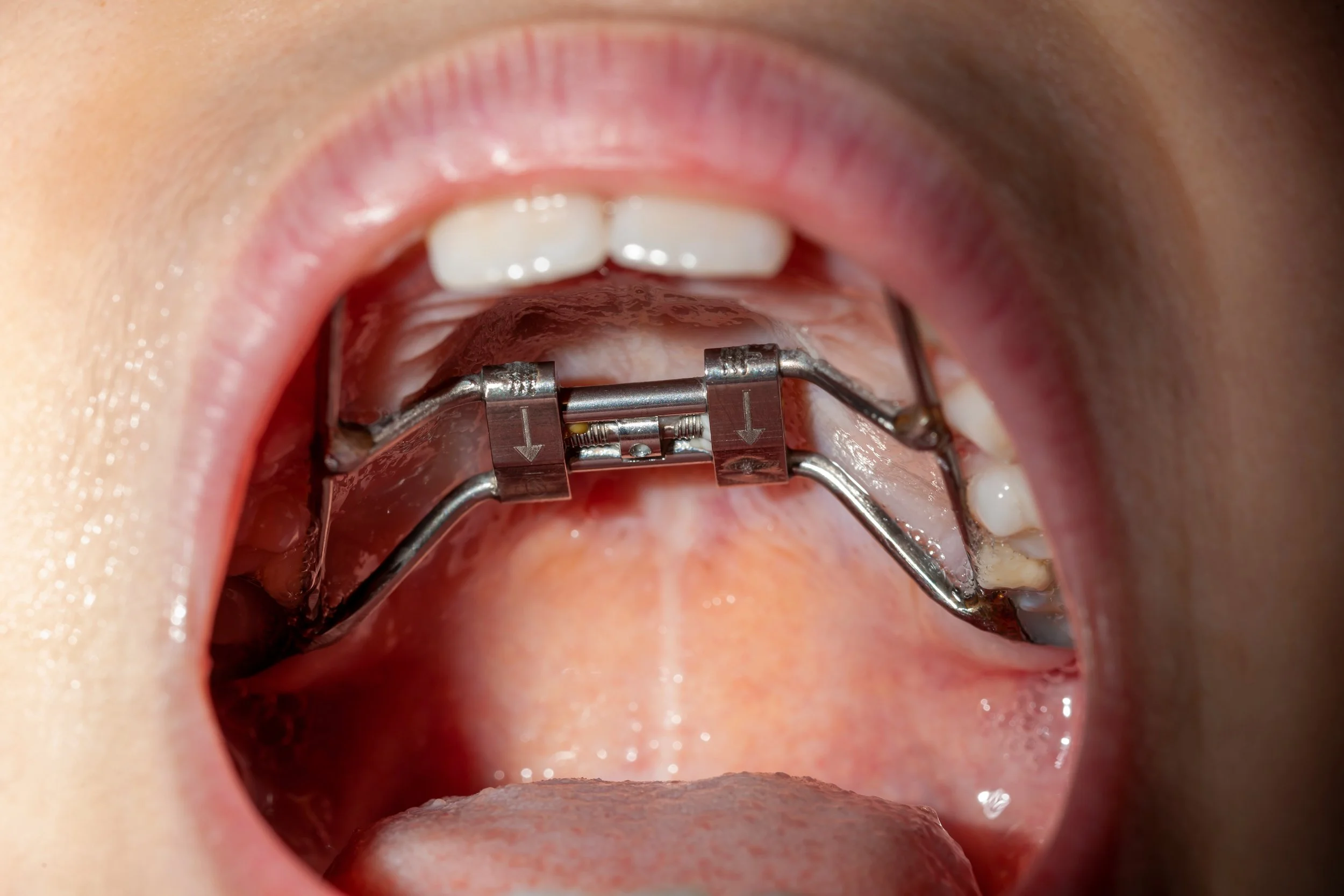
Traditional expanders are metal appliances attached to the upper molars. They usually consist of metal bands placed around the back teeth with a screw positioned in the centre of the device across the roof of the mouth. This type of appliance is commonly referred to as a Rapid Maxillary Expander (RME).
The expander is fixed in place by the orthodontist and stays in the mouth throughout the expansion phase. To widen the appliance, the central screw is turned, and each turn slightly increases the width of the device, applying pressure across the upper jaw.
Because the appliance sits across the palate and around the molars, cleaning can take extra effort. Food may get trapped around the metal parts, and brushing needs to be done carefully around the appliance. Some children also take a little time to adjust when speaking or eating, and the metal components can sometimes rub against the tongue or cheeks.
Invisalign Palatal Expander (IPE): A Digital Alternative
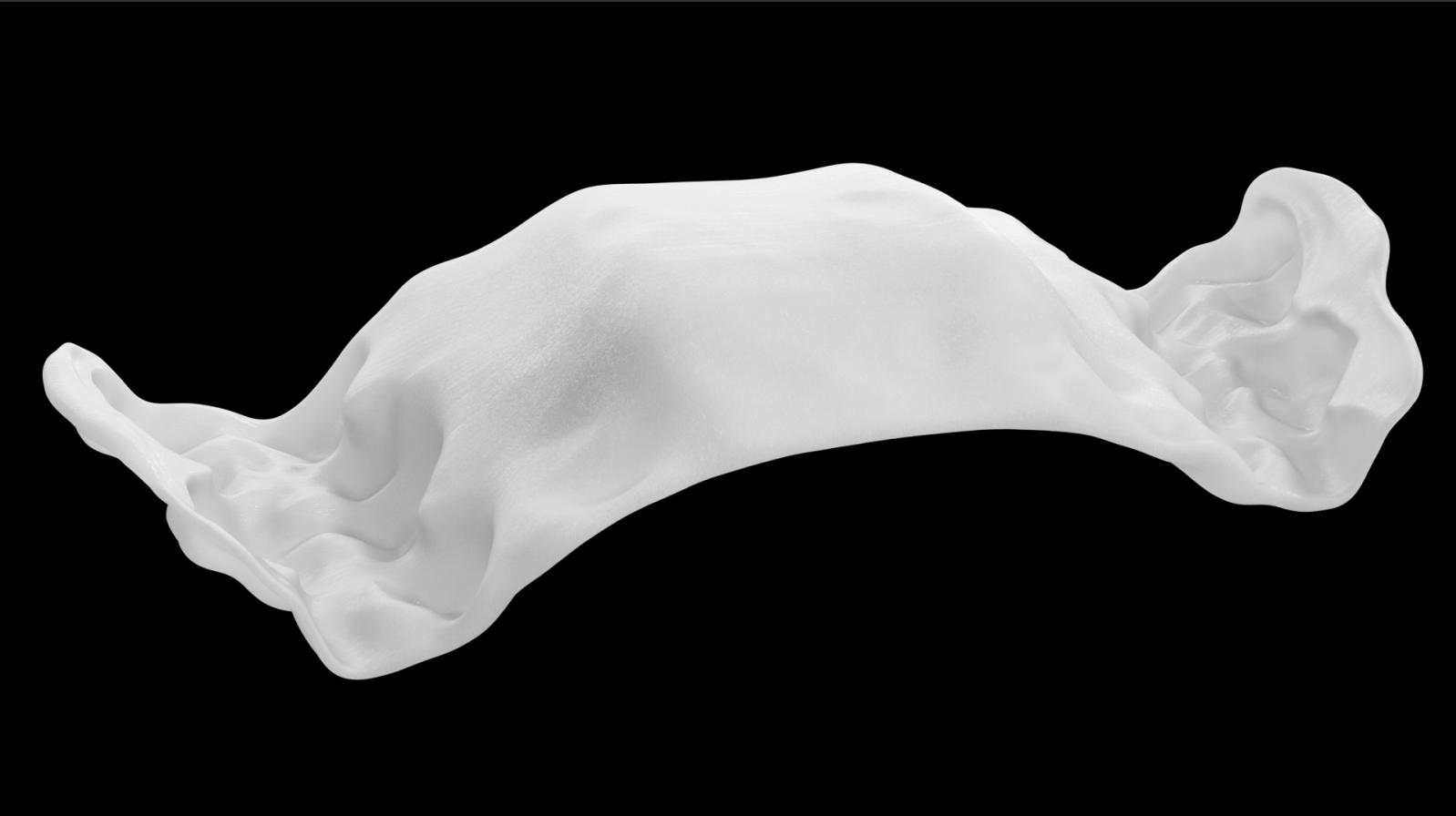
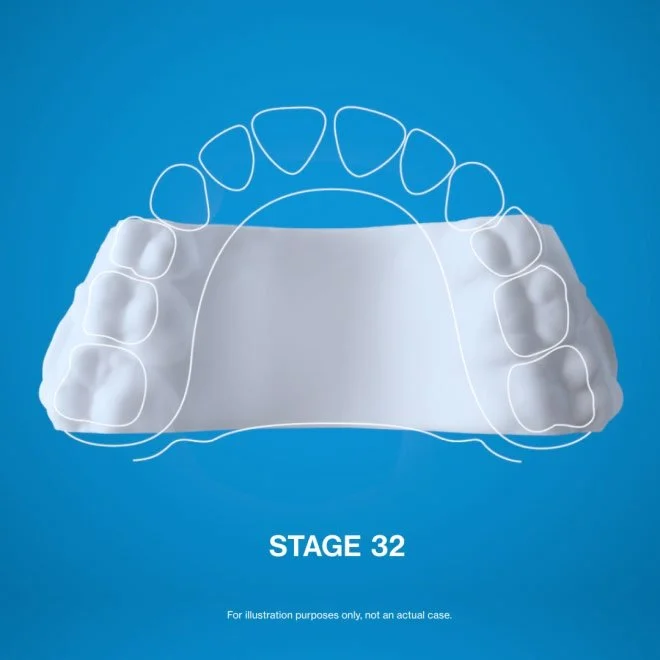
The Invisalign Palatal Expander takes a different approach. Instead of a fixed metal appliance, the system uses a series of removable expanders that are created from digital scans of the patient’s mouth. Each device is 3D printed to match the shape of the upper arch.
Expansion also happens through a sequence of appliances worn over time. After wearing one stage for a set period, the individual moves to the next expander in the series, which introduces a small adjustment in width. This staged approach replaces the need for manual screw adjustments.
In addition, the appliance does not include metal components and can be removed during brushing. It is also designed to work with the Invisalign treatment, so once the expansion phase is complete, aligners may be used to continue guiding the teeth into position.
Comparing Considerations
Since both options are used to achieve the same outcome, the differences often come down to how each appliance fits into daily routines and the type of expansion required.
| Factor | Traditional Expanders | Invisalign Palatal Expander |
|---|---|---|
| Design | Metal appliance fixed to molars | Removable, 3D-printed plastic devices |
| Adjustment | Manual screw activation required | Series-based progression, no manual turning |
| Comfort | May feel bulky, and speech changes may occur at the start | Smooth fit with gradual adjustment over stages |
| Hygiene | Cleaning around the appliance requires extra care | Can be removed for brushing and cleaning |
| Compliance | Fixed in place, no reliance on wear habits | Requires consistent daily wear as instructed |
| Suitability | Used across a wide range of cases, including larger expansion needs | Often considered for growing children; it depends on the individual case |
When is Invisalign Palatal Expansion Recommended?
Whether palatal expansion is required, it is determined during an orthodontic assessment. The orthodontist will usually review how the upper and lower teeth fit together and may use scans or imaging to examine the jaw structure before deciding if palate expansion should form part of the treatment plan.
Clinical situations where expansion may be recommended include:
Narrow upper jaw (maxillary constriction): The upper arch does not have sufficient width for the developing teeth.
Unilateral crossbite: The bite is affected on one side of the mouth.
Bilateral crossbite: Both sides of the upper teeth sit inside the lower teeth when biting.
Larger expansion requirements: Some treatment plans involve widening the upper arch by a measurable amount.
Signs parents sometimes notice include:
Crowded upper teeth
A smile that appears narrow
Mouth breathing during rest or sleep
Upper and lower teeth do not meet evenly when biting
Why Early Expansion Matters for Your Child’s Development
Now, why might an orthodontist raise palate expansion during childhood rather than waiting until the teenage years?
During childhood, the upper jaw is still developing, and the bones remain pliable. As mentioned, the mid-palatal suture has not yet fused, allowing the jaw to respond to orthodontic expansion. Because of this stage of growth, widening the upper arch can usually be carried out without surgery.
Addressing jaw width at this stage can also influence how the permanent teeth emerge and how the upper and lower teeth meet when biting. That said, expansion is not required for every child, and the decision depends on an orthodontic assessment of jaw structure and bite development.
How Palatal Expansion Helps
Once the upper arch has been widened, the next stage of orthodontic care can proceed since there should be sufficient room for tooth movement.
Creates space before Invisalign treatment: Expansion prepares the upper arch so Invisalign or braces can guide teeth into position without competing for limited room.
Supports how the upper and lower teeth meet: Adjusting the width of the upper jaw can allow the bite to come together in a balanced way during later orthodontic stages.
May influence oral and airway function in some cases: Widening the upper arch can affect how the palate and nasal passages sit, depending on the individual’s anatomy.
Reduces the likelihood of complex corrections or extractions later: When jaw width is addressed earlier in the treatment plan, later orthodontic phases may involve few adjustments or complications.
Step-by-Step Journey: From Palatal Expansion to Invisalign First
Once expansion is recommended, treatment usually follows a structured sequence.
1. Initial Consultation
The process often begins with an early orthodontic assessment. During this visit, the dentist reviews the current oral condition and overall jaw development. This stage is not a formal diagnosis but helps identify concerns such as narrow upper arches or crossbite patterns that may affect how the teeth and jaws develop.
2. Clinical Evaluation & Imaging
If expansion is being considered, the dentist may carry out further examination using digital intraoral scans and dental imaging. X-rays or CBCT scans may be taken when necessary to study bone width, jaw structure, and how the permanent teeth are developing beneath the gums.
3. Personalised Expansion Plan
Based on the scans and clinical findings, the dentist prepares a customised plan. Digital records are used to design expanders that match one's oral anatomy.
4. Placement of Attachments & First Expander
Small attachments may be bonded onto selected teeth to help secure the palatal expander. The first appliance is then fitted, and instructions will be provided on how to insert, remove, and care for the device during daily wear.
5. Active Expansion Phase
During this stage, expanders are changed regularly according to the dentist’s instructions. Each stage introduces a slight adjustment that gradually widens the upper jaw.
6. Stabilisation (Holding) Phase
After the expansion stage is completed, a holding appliance is worn full-time. This phase allows the bone to consolidate within the widened area of the upper jaw. The stabilisation period commonly lasts about three months to maintain the expansion achieved.
7. Transition Scan for Invisalign First Aligners
Once the jaw structure has stabilised, another digital scan is taken to prepare the next phase of orthodontic treatment. These scans are used to plan the sequence of clear aligners that will guide the teeth into position.
8. Invisalign First Clear Aligner Phase
The aligner stage begins after the holding phase. The Invisalign clear aligners will be worn for around 20–22 hours each day.
9. Retention Phase
After the aligner phase is complete, retainers are worn to maintain the results and the width achieved through expansion.
Ready to Explore Whether Palatal Expansion is Right?
If you are considering orthodontic care for your child, a dental assessment can help determine whether palatal expansion is needed. At Sincere Dental, our team of dentists in Jurong will review the bite, jaw development, and overall orthodontic needs during the consultation. And should you have questions about what an Invisalign palatal expander is or if Invisalign can be used as a palate expander, our team can walk you through how the system works and what the treatment process may involve.